
Basement insulation in Cerritos CA - a dry wall under a warm, quiet room
Cold floors, a damp smell or a room below grade that never feels right? We check the walls for water, then insulate them properly.
What does it take to insulate a basement in Cerritos?
Basement insulation in Cerritos means putting insulation, usually rigid foam board, on the walls of a basement or below-grade room so the space holds its temperature and carries less sound from the rest of the house.
Most people call about a basement because the room down there runs cold, smells a little damp or picks up every footstep from upstairs. Insulation helps with all three, but only on a wall that's staying dry, so that's where we start. Caliber Cerritos Spray Foam Insulation is based in Cerritos, and we work in many cities around it across Los Angeles County and Orange County.
The price mostly follows how much wall there is, which material fits it and whether a water problem has to be dealt with first. The schedule turns on that same fix and on the city's approval, and your written estimate lays out each step in order so you can see both. We're fully licensed and insured, and you should ask any bidder about that, since the state licensing board requires a license for work that needs a permit, uses employees or costs $1,000 or more in total.
- We insulate basement walls, mostly with rigid foam board, and use spray foam where it fits better.
- The same approach works for a full basement, a partial one or a single room below ground.
- Old paneling, framing or insulation on the walls gets checked, and comes off if it's hiding trouble.
What happens when you call us about basement insulation?
Here's how a basement job runs with us, from the first call to the walkthrough at the end. I keep the steps in this order so nothing gets covered before it's been checked.
Call or send a message
Call (562) 307-9067 or use the form, and tell us the basement's size, what's on the walls now and any signs of water coming through. We'll set up a time for me to come out.
I walk the basement and measure
I come out myself, check each wall for water, measure and take photos. You then get a written estimate that lists each step in the order we'd do it, figured from the wall you actually have, so the numbers match your house.
Our installers do the work
Our installers protect the house, then put the insulation up once any water problem is handled. Cerritos allows construction from 7 a.m. to 6 p.m. on weekdays and 10 a.m. to 5 p.m. on Saturdays, with no work on Sundays or city holidays unless the city approves it in writing, so we plan crew days inside those hours.
I check the finished job
Before we call it done, I go over the finished walls with you, seams and edges included. If something doesn't look right to you, we talk it through right there.
Foam board, spray foam and the insulation work behind them
These photos show insulation work across our trade, from foam board on concrete to spray foam in open framing. They're here to show the materials, so you can picture what would go on your walls.
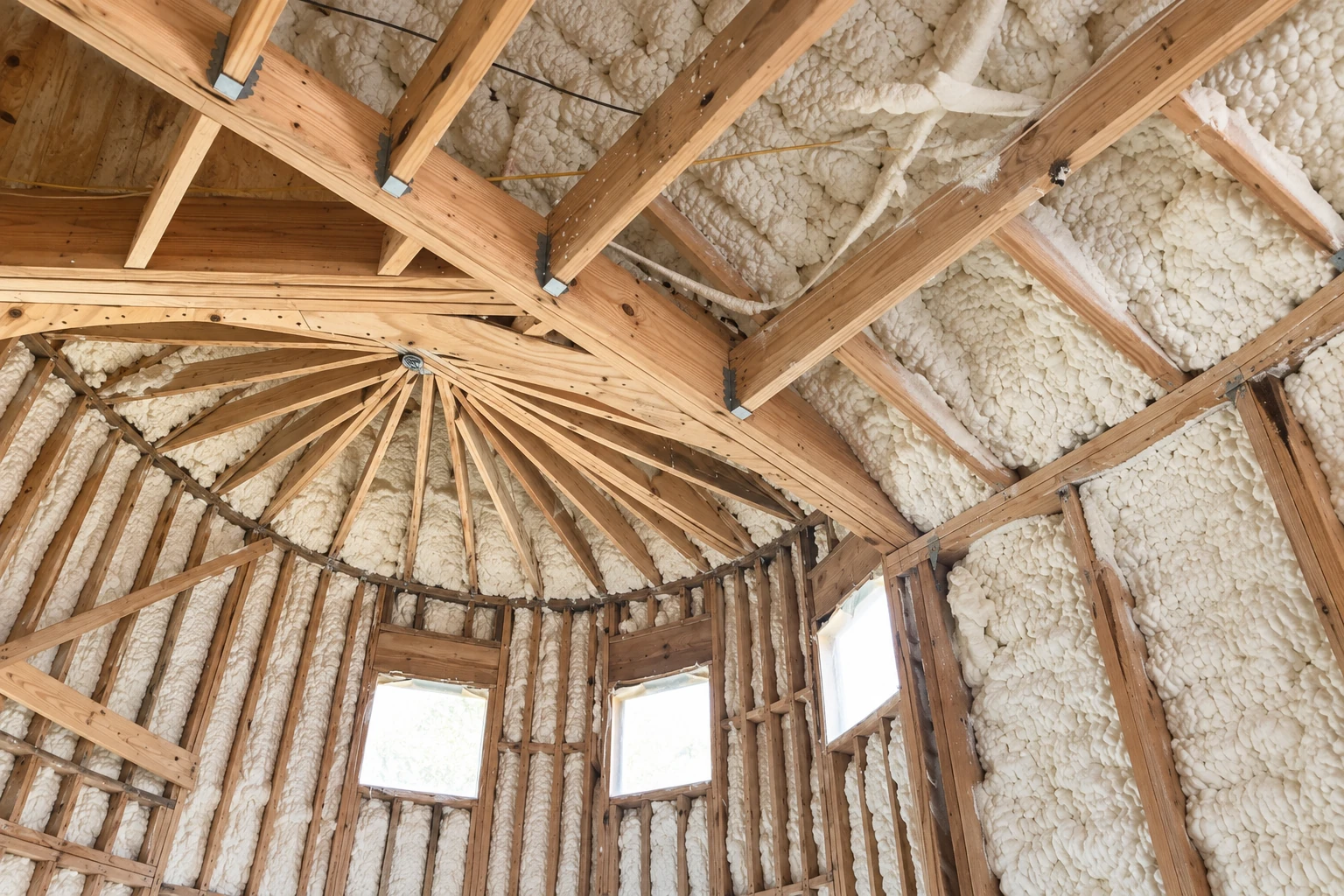
Spray foam insulation coats the rafters and walls of an unfinished room, with exposed wooden framing and foil-wrapped ducts.
An unfinished room has exposed framing with cream-colored spray foam filling the walls and roof.
A worker in a blue hard hat stands among rolls of yellow fiberglass insulation in an attic lined with insulation batts.
Worker in protective suit sprays foam insulation across an attic floor beneath exposed wooden rafters.
A worker in protective coveralls sprays foam insulation into the roof rafters of a framed room.
An installer in protective coveralls feeds loose-fill insulation through a hose across an attic floor among exposed wooden trusses.
Get a written basement insulation estimate for your walls
We reply within one business day to set up a free on-site visit, and there's no obligation. I come out, check the walls for water, measure, and send you a written estimate with each step in order.
(562) 307-9067Questions about insulating a basement in Cerritos
These are the questions people ask me most about basement walls. The answers lean on federal guidance for basement insulation, which applies nationwide and isn't a Cerritos rule.
How much does basement insulation cost near Cerritos?
Insulating a basement in the Los Angeles area usually costs about $1.50 to $4.50 per square foot for installation. Where yours lands depends on the wall area, the material and any water fix that has to come first, and the written estimate shows each of those as its own step.
Does a basement wall need to be dry before it's insulated?
Yes, any water coming in should be found and fixed before insulation goes up. Federal guidance puts that check first because insulation over a leaking wall can hide the problem, and if I find dampness on the visit, it goes on your estimate as the first step.
What is the best way to insulate a basement wall against the ground?
Federal guidance says rigid foam board works on a basement wall when the panels stick fully to it, with no air gaps and the seams sealed tight. Fiberglass batts and cellulose should stay off the foundation wall, so when you compare bids, ask each contractor what will be touching the concrete.
What causes a basement wall to stay damp after it's insulated?
Usually it's insulation that went over a leak nobody fixed, or a finish on the inside of the wall that traps moisture. Federal guidance says to keep plastic sheeting, vinyl or foil wallpaper, and epoxy, oil or alkyd paint off the inside of basement walls, so tell me if your walls have any of those.
Should I insulate the outside of my basement walls instead of the inside?
Not where termites are a problem, because federal guidance says exterior insulation on basement walls shouldn't be used there. Where it is used, it has to be carefully protected from moisture while it goes in.
Does spray foam in a basement have to be covered?
Yes, federal guidance says spray foam needs ignition-barrier paint or drywall over it. Ask how each bid covers the foam, and when we use spray foam, the covering is listed on the estimate.
Basement insulation in Cerritos and the cities around it
Cerritos requires Planning Division approval before home improvement work begins, so we check with the city and handle any permit and inspection before we set a date. We also work in Norwalk, Bellflower and many cities around them.