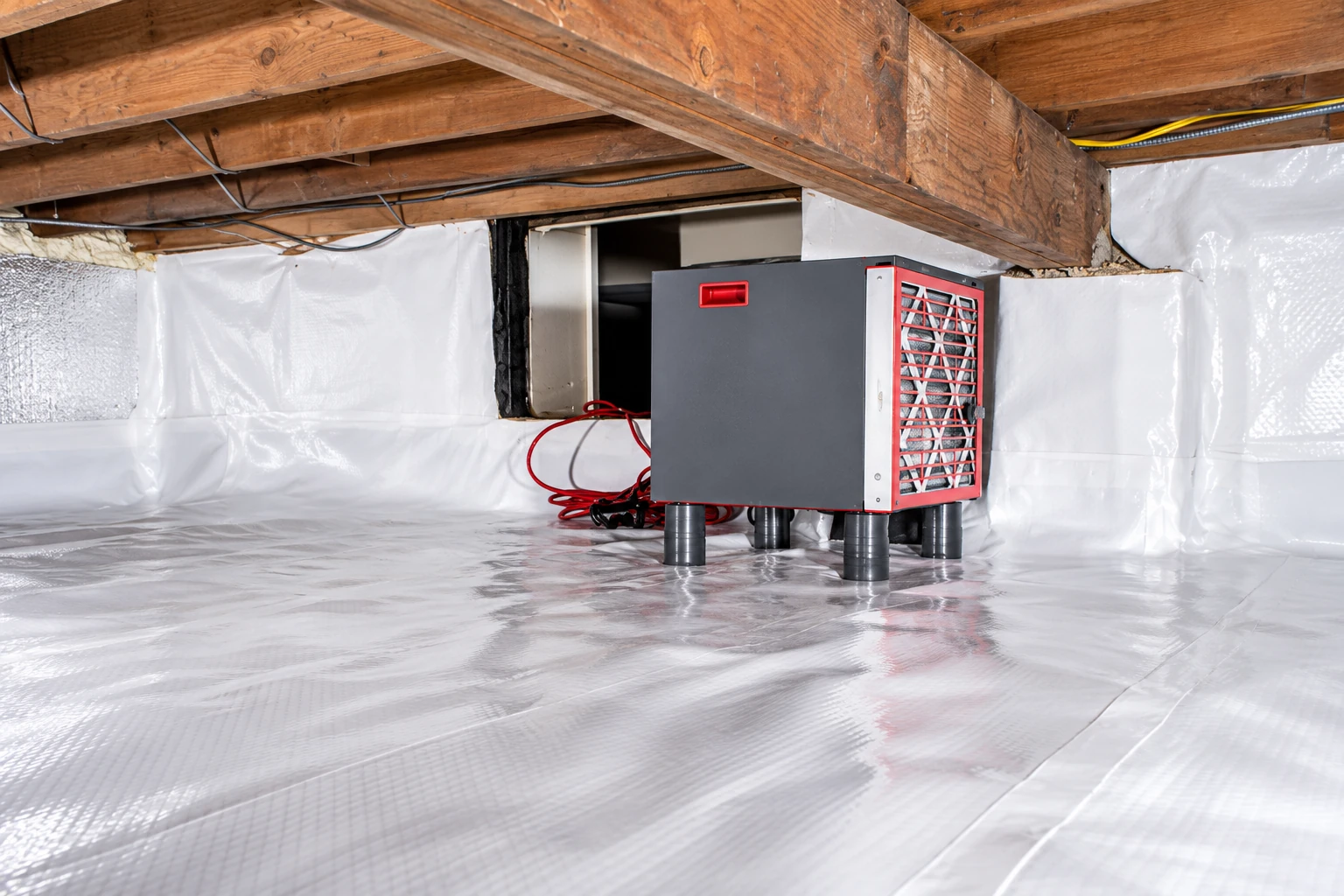
Vapor barrier installation in Cerritos CA - a sealed cover over crawl space soil
Damp soil or a musty smell coming up from the crawl space? We check for leaks, then seal the ground under one continuous barrier.
What does a vapor barrier do for my crawl space?
Vapor barrier installation in Cerritos means laying plastic sheeting, usually polyethylene, over the dirt in your crawl space and sealing it, so ground moisture stays under the sheet instead of rising into the framing and the floor above.
Most calls start with something you notice, like a musty smell in the house, cold floors or a plumber telling you the plastic under the house is torn or gone. Sometimes there was never any plastic down there at all, and the soil has been giving off moisture into the crawl space for as long as the house has stood.
The price moves with the size of the crawl space, whether the barrier stops at the floor or goes up the walls, and how heavy a sheet you pick. The schedule mostly turns on whether there's a leak to fix first and on the city's approval, and your written estimate lays out each step in the order we'd do it. We're based in Cerritos and work in many cities around it in Los Angeles County and Orange County.
- The barrier covers all of the soil, sealed at the seams, around piers and at the walls.
- A basic barrier stops at the floor, while full encapsulation carries it up the foundation walls too.
- You can stay home during the work, since all of it happens under the floor.
What happens after you call us about a vapor barrier?
I do the crawl space visits and the estimates myself, and our installers do the work. Here's how a Cerritos job usually runs, from your first call to the walk-through at the end.
Call or send a message
You reach us at (562) 307-9067 or through the form, and we set up a time for me to come look under the house. Tell us then if you've seen damp soil, standing water or a musty smell.
I inspect and measure everything
I come out myself, go through the crawl space, measure it, look for signs of water and take photos. You get a written estimate listing each step in the order we'd do it, priced for your crawl space and the choices you make.
Our installers lay the barrier
On the day, our installers protect your house and put the barrier in. Cerritos allows construction from 7 a.m. to 6 p.m. on weekdays and 10 a.m. to 5 p.m. on Saturdays, with no Sunday or city holiday work unless the city approves other hours in writing.
We walk through it together
I check the installers' work, then go over the finished crawl space with you, using photos if you'd rather not crawl in yourself. We don't call the job done until that walk-through is finished.
Insulation and crawl space work, from bare soil to sealed
These photos show the kind of insulation and moisture work our trade does in crawl spaces and attics. They're here to help you picture the materials and finished surfaces we talk about on this page.
Worker in protective suit sprays foam insulation across an attic floor beneath exposed wooden rafters.
Exposed wooden roof framing and wall studs are coated with white spray foam insulation.
Pink blown-in insulation covers an attic floor beneath exposed wooden trusses and beside flexible ducts.
Wooden roof trusses stand before white spray foam coating the roof and walls of an unfinished home.
Fresh spray foam coats the ceiling and wall framing beside large windows overlooking a snowy yard.
A worker in protective coveralls sprays foam insulation into the roof rafters of a framed room.
Get a written vapor barrier estimate for your crawl space
Send the form and we'll reply within one business day to book a free on-site estimate, with no obligation. Note whether your house sits over a crawl space and any damp soil or musty smell you've noticed.
(562) 307-9067Vapor barrier questions we hear from Cerritos homeowners
These are the questions that come up most when people ask us about covering a crawl space. If yours isn't here, ask me at the estimate and I'll answer it with your crawl space in front of us.
How thick should a crawl space vapor barrier be, and how long does it last?
University extension guidance says the soil should be covered with plastic at least 6 to 8 mil thick, so a quote for thinner sheeting falls below that minimum. One cost guide puts a 6-mil contractor grade sheet at 3 to 5 years and a 20-mil reinforced barrier at 25 years or more. That's why the heavier sheet usually pays off if you plan to stay in the house.
How much does vapor barrier installation cost in Cerritos?
There's no set price, because the cost comes from your own crawl space and the two choices you make about walls and sheet weight. A low crawl space that's hard to move around in, lots of piers and pipes to seal around, old plastic to haul out or a leak to fix first all add to it. A roomy, dry, open crawl space keeps it down, and your written estimate prices each step from my measurements.
Does a vapor barrier installer need a license in California?
Yes, unless the job is small enough for California's minor work exemption, which tops out at $1,000. That exemption only applies when the work needs no permit and the person doing it has no employees, so anyone sending a crew needs a state license. We're fully licensed and insured.
How do I pay a contractor for a vapor barrier job in California?
Keep the down payment at 10 percent of the contract price or less, which is what California's contractor license board advises. After that, each payment should match the work completed or the materials delivered, so you're not paying ahead of the job.
How do I know if my crawl space is too humid?
Crawl space humidity should stay below 60 percent, and extension guidance calls 30 to 50 percent the best range. If a humidity gauge from the hardware store reads above 60 percent down there, the same guidance says to consider a dehumidifier.
How do I take care of a crawl space vapor barrier after it's installed?
Check now and then that it's still in good condition and lying where it belongs, which home maintenance guidance lists as a routine task. Look for torn spots, lifted seams or sheeting pulled off the walls. If you run a dehumidifier down there, empty and clean its drip pan regularly.
Vapor barrier installation in Cerritos and nearby cities
Cerritos requires Planning Division approval before any home improvement project, so I check with the city before we set a date and handle any permit paperwork. You can also ask its Department of Community Development at (562) 916-1201.